In 2025, Shengtao Metal completed a custom fabrication project for a Southeast Asian process automation equipment manufacturer specializing in instrumentation systems for chemical plants, power generation facilities, and industrial process control applications.
The customer required a complete batch of stainless steel instrument tubing assemblies designed for installation within automated pressure monitoring and fluid control systems. Unlike standard tubing supply projects, this order involved not only tube manufacturing but also precision cutting, CNC tube bending, orbital welding, assembly integration, pressure testing, and final packaging.
The tubing assemblies would ultimately be installed inside process automation skids where reliability, leak-free performance, and dimensional consistency were critical to system operation. Any failure within the tubing network could affect pressure transmission accuracy, instrumentation performance, or process safety.
The project represented a comprehensive fabrication challenge requiring close coordination between engineering, production, quality control, and logistics teams.
The customer was facing increasing demand for modular process automation systems and needed a supplier capable of delivering pre-fabricated tubing assemblies ready for installation.
Several key requirements were identified during project planning.
First, the assemblies had to be manufactured using corrosion-resistant stainless steel suitable for continuous operation in industrial environments exposed to moisture, chemicals, and temperature fluctuations.
Second, every tubing section required precise bending geometry to fit within compact control cabinets and skid-mounted systems where installation space was extremely limited.
Third, welded joints needed to meet strict leak-free performance standards because the assemblies would carry process signals and instrument air throughout the system.
Fourth, all assemblies had to be fully interchangeable to simplify installation across multiple production projects.
The customer also requested complete dimensional verification and pressure testing documentation to support final equipment certification.
Engineering Review and Assembly Development
Before production began, Shengtao Metal's engineering team reviewed customer drawings and assembly layouts.
The project consisted of multiple tubing configurations ranging from simple straight sections to complex multi-bend assemblies incorporating welded fittings, connectors, and mounting brackets.
Several manufacturability improvements were proposed during the review process.
Tube routing paths were optimized to improve bending efficiency while maintaining identical installation dimensions. Certain fitting locations were adjusted slightly to reduce welding complexity and improve accessibility during assembly.
These modifications reduced production time while preserving the original functional requirements specified by the customer.
A complete assembly validation process was conducted using 3D CAD models before fabrication commenced.
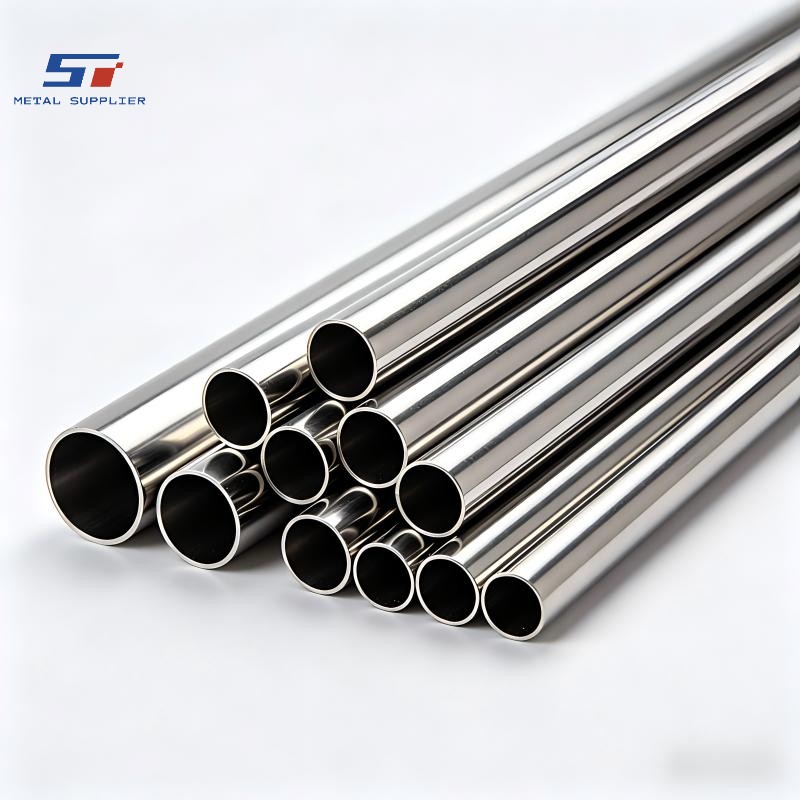
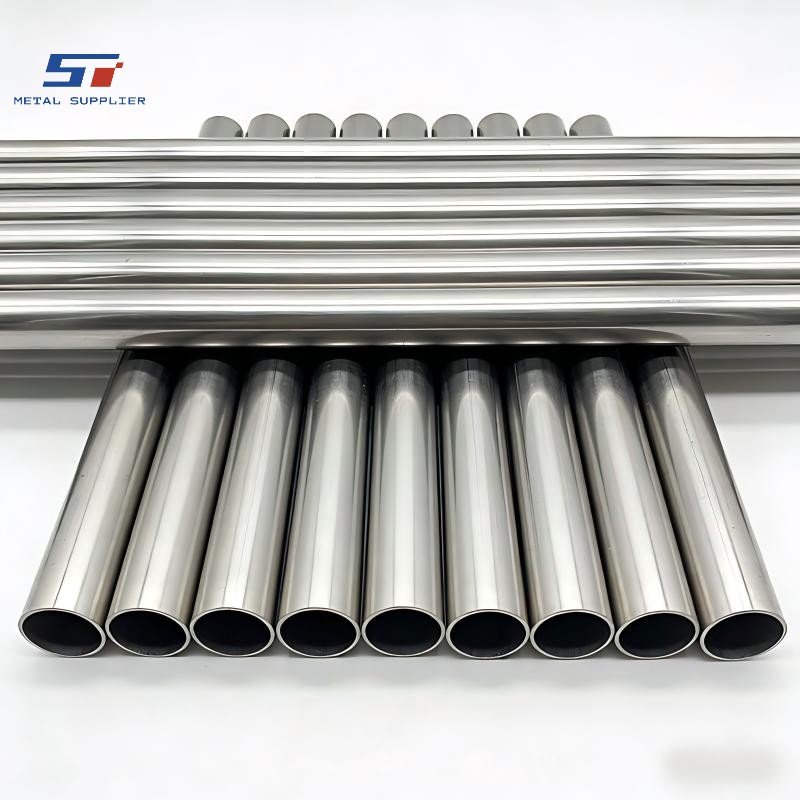
The customer selected ASTM A269 TP316L stainless steel tubing for all assemblies.
This material offered several advantages for instrumentation applications:
- Excellent corrosion resistance
- High dimensional stability
- Good weldability
- Long service life
- Compatibility with industrial process fluids
The tubing utilized outside diameters ranging from 6 mm to 12 mm depending on the specific application.
Each material batch underwent incoming inspection procedures, including:
- Material certification verification
- Visual surface inspection
- Dimensional confirmation
- Heat number traceability review
Complete material traceability was maintained throughout production.
Precision Tube Cutting and Preparation
The fabrication process began with automated tube cutting operations.
Unlike general-purpose cutting methods, instrumentation tubing requires highly accurate cut lengths because even small dimensional deviations can create installation problems within compact equipment layouts.
CNC-controlled tube cutting equipment was used to ensure repeatable length accuracy.
After cutting, tube ends were prepared for subsequent bending and welding operations.
Preparation activities included:
- Deburring
- Surface cleaning
- End squaring
- Dimensional verification
These steps helped ensure consistent assembly quality throughout production.
CNC Tube Bending Operations
Tube bending represented one of the most technically demanding aspects of the project.
The assemblies contained numerous complex bends designed to route tubing through confined spaces while maintaining proper flow characteristics.
Several challenges required careful process control:
- Maintaining bend angle accuracy
- Preventing tube flattening
- Controlling spring-back
- Preserving internal diameter consistency
Shengtao Metal utilized CNC mandrel tube bending equipment capable of producing highly accurate bend geometries while minimizing distortion.
Critical bending tolerances included:
| Feature |
Requirement |
| Bend Angle Accuracy |
±0.5° |
| Cut Length Accuracy |
±0.3 mm |
| Tube Position Accuracy |
±1.0 mm |
| Ovality After Bending |
≤8% |
Each assembly underwent dimensional inspection following bending operations to verify compliance with design specifications.
Many assemblies required welded connections between tubing sections and stainless steel fittings.
Because instrumentation systems operate under demanding service conditions, weld quality was considered a critical performance factor.
Automated orbital welding technology was selected for the project.
Compared to manual welding, orbital welding offers several advantages:
- Consistent weld penetration
- Reduced human variation
- Improved repeatability
- Better internal weld quality
- Enhanced corrosion resistance
All welding procedures were developed according to approved welding specifications.
Weld parameters were carefully controlled to minimize heat input and maintain tubing dimensional stability.
Each weld joint was visually inspected and documented as part of the quality assurance process.
Following bending and welding operations, components progressed to final assembly.
Assemblies incorporated:
- Stainless steel tubing
- Compression fittings
- Mounting brackets
- Instrument connectors
- Support hardware
Assembly technicians utilized dedicated fixtures to ensure repeatable positioning of all components.
Dimensional gauges were used throughout assembly to verify compliance with customer requirements.
Because the tubing assemblies would be installed directly into process automation equipment, maintaining installation accuracy was essential.
Pressure Testing and Quality Verification
To ensure operational reliability, every completed assembly underwent comprehensive testing procedures.
Testing activities included:
- Visual inspection
- Dimensional verification
- Weld examination
- Pressure testing
- Leak testing
Hydrostatic pressure testing was conducted at 1.5 times the expected operating pressure.
Random samples were also subjected to extended leak testing to verify long-term performance characteristics.
Inspection records were compiled into a complete documentation package provided to the customer upon shipment.
The project included more than 1,500 individual tubing assemblies across multiple configuration types.
Production performance results included:
- Total assemblies delivered: 1,520 units
- First-pass acceptance rate: 98.8%
- Weld defect rate: below 0.5%
- On-time delivery performance: 99.3%
- Assembly dimensional compliance: 99.5%
- Customer installation adjustments reduced by 35%
The customer reported significantly improved installation efficiency compared to previous suppliers.
Because the assemblies arrived fully fabricated and verified, field technicians spent less time performing adjustments during equipment integration.
The completed project generated several measurable benefits for the customer.
Pre-fabricated assemblies reduced labor requirements during final equipment assembly.
Consistent dimensional accuracy improved installation speed across multiple automation systems.
High-quality orbital welds reduced concerns regarding leakage and maintenance requirements.
The customer also benefited from simplified supply chain management by sourcing fabrication, welding, inspection, and packaging services from a single supplier.
These improvements contributed to shorter project completion times and reduced overall production costs.
This project demonstrates the importance of precision fabrication, advanced tube bending technology, and controlled welding processes in the production of stainless steel instrument tubing assemblies.
Through integrated manufacturing capabilities, strict quality control procedures, and close engineering collaboration, Shengtao Metal successfully delivered a complete tubing assembly solution tailored to the requirements of modern process automation systems.
For manufacturers operating in instrumentation, process control, and industrial automation sectors, high-quality tubing assemblies remain essential components that directly influence system reliability, operational efficiency, and long-term performance.
Contact Shengtao Metal for Steel Product Solutions
If you are looking for reliable steel and metal product solutions, feel free to send us your inquiry.
Simply provide your specifications such as material grade, dimensions, quantity or application, and our team will respond quickly with professional support and a competitive quotation.
Email: stsalesman4@stmetal001.com